Public Diplomacy
“Public diplomacy is the communication of a sovereign political entity, through a duly accredited representative, with a private person subject to the permanent jurisdiction of another sovereign political entity”
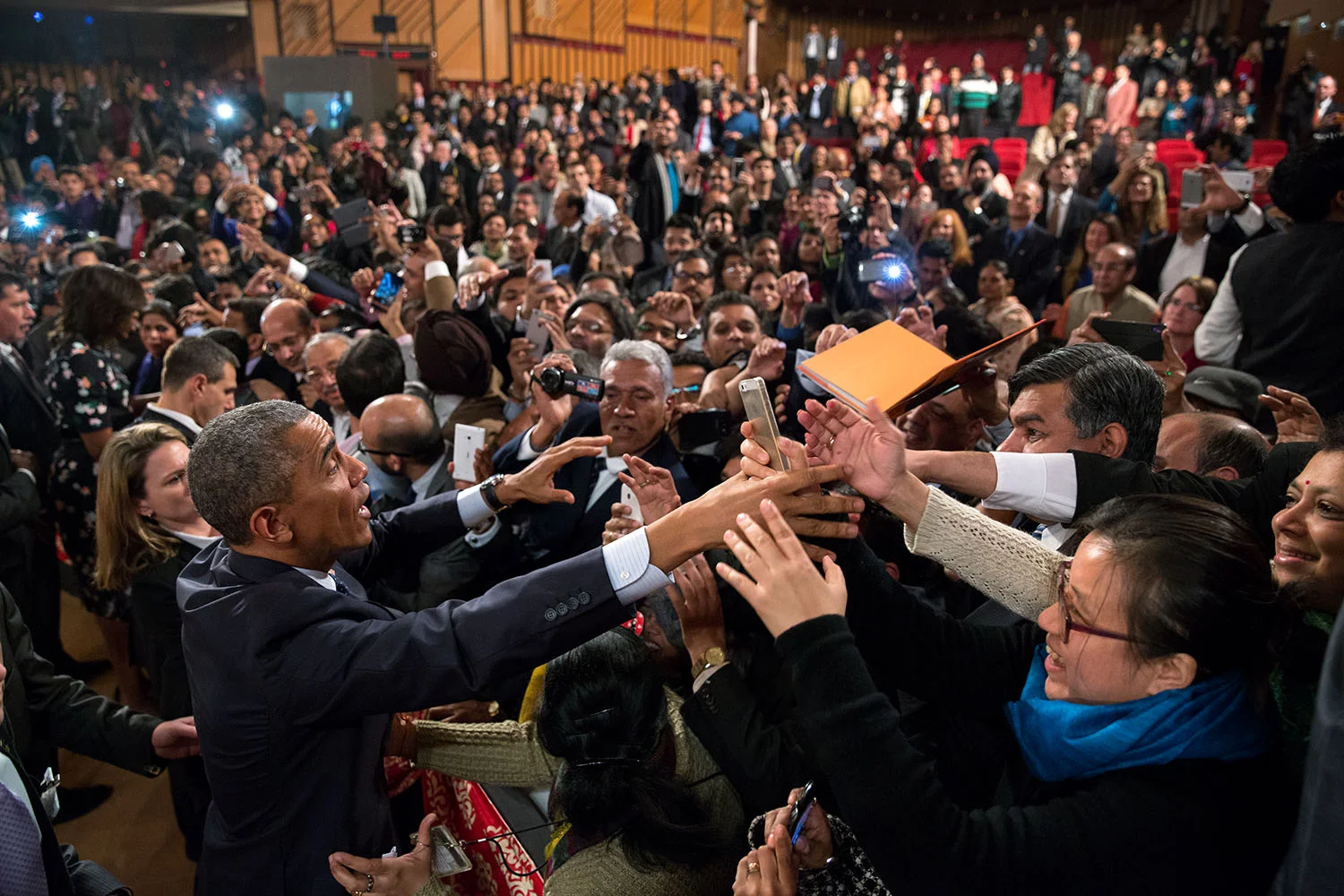
U.S. President Barack Obama greets the audience following his speech at Siri Fort Auditorium in New Delhi, India, on January 27, 2015. Photo: Pete Souza, White House. United States Government Work. 2015.
What is public diplomacy?
I define public diplomacy as the communication of a sovereign political entity, through a duly accredited representative, with a private person subject to the permanent jurisdiction of another sovereign political entity.
In simpler, but less accurate words, public diplomacy is the communication of a diplomat of one country with a private national of another country.

This definition has three fundamental parts:
Actor 1 (Communicator): Duly accredited representative (diplomat) of a sovereign political entity
Actor 2 (Receiver): Private person of another sovereign political entity
Communication from Actor 1 to Actor 2
How did I arrive to this definition of public diplomacy?
I have been working for years on a definition of public diplomacy that aims for accuracy and usefulness. This definition, which I consider work in progress, is the result of several discussions and much feedback.
This definition derives from my academic formation in communication and international relations, and my experience working for diplomatic entities. I use frameworks based on Giovanni Sartori's work on concept formation for social sciences (which I strongly recommend), and research by communication and international relations specialists (named below).
To better explain how I arrived to my definition of public diplomacy, I have divided the thought process it into four steps:
Establishing the communication model
Connecting the communication model with diplomatic law
Categorizing actors in communication
Categorizing communication across sovereign jurisdictions
Step 1: Establishing the communication model
My starting point is Harold Lasswell's model of communication: "who says what in which channel to whom with what effect"

Each component of the model can be simplified as communicator (who says), message (what), channel (in which channel), audience (to whom), effect (with what effect).

Step 2: Connecting the communication model with diplomatic law
Identifying the relation between communication and diplomacy is probably the most important part in the process of defining public diplomacy. I combined the work of Christer Jönnson and Martin Hall, Jarol Manheim, Eduardo Vilariño Pintos, and the UN International Law Commission.
Christer Jönsson and Martin Hall explain that communication is an essential component of diplomacy, and Jarol Manheim classifies different types of diplomacy based on a combination of actors in communication (communicator and audience).
For Manheim, traditional diplomacy is government-to-government communication, personal diplomacy is diplomat-to-diplomat communication, and public diplomacy is either public-to-public or government-to-public communication.
Manheim's work is a good starting point. I agree with his focus on communicator and audience (in my view, message, channel or effect do not determine the existence of diplomacy or public diplomacy). However, I disagree with Manheim's criteria for selecting actors and for creating diplomacy categories. Based on diplomatic law, I argue that no private person carries out diplomacy, and neither does every individual or agency in a government.
To determine whether an actor carries out diplomacy, and to create diplomacy categories, I focus on three elements: 1) political sovereignty, 2) duly accredited representativeness, and 3) communication across sovereign jurisdictions, based on the work of Eduardo Vilariño Pintos and the UN International Law Commission.
Step 3. Categorizing actors in communication
By combining 1) political sovereignty, 2) duly accredited representativeness, and 3) communication across sovereign jurisdictions,I grouped a sovereign political entity's population into three categories of actors:
Government: Diplomats
Government: Non-diplomats
Private persons
These categories are mutually exclusive and collectively exhaustive. This means that each actor within a sovereign political entity belongs to only one of the three categories.
Let me explain the categories of actors through visual examples.
Population
A sovereign political entity has legitimate jurisdiction and authority over a population.
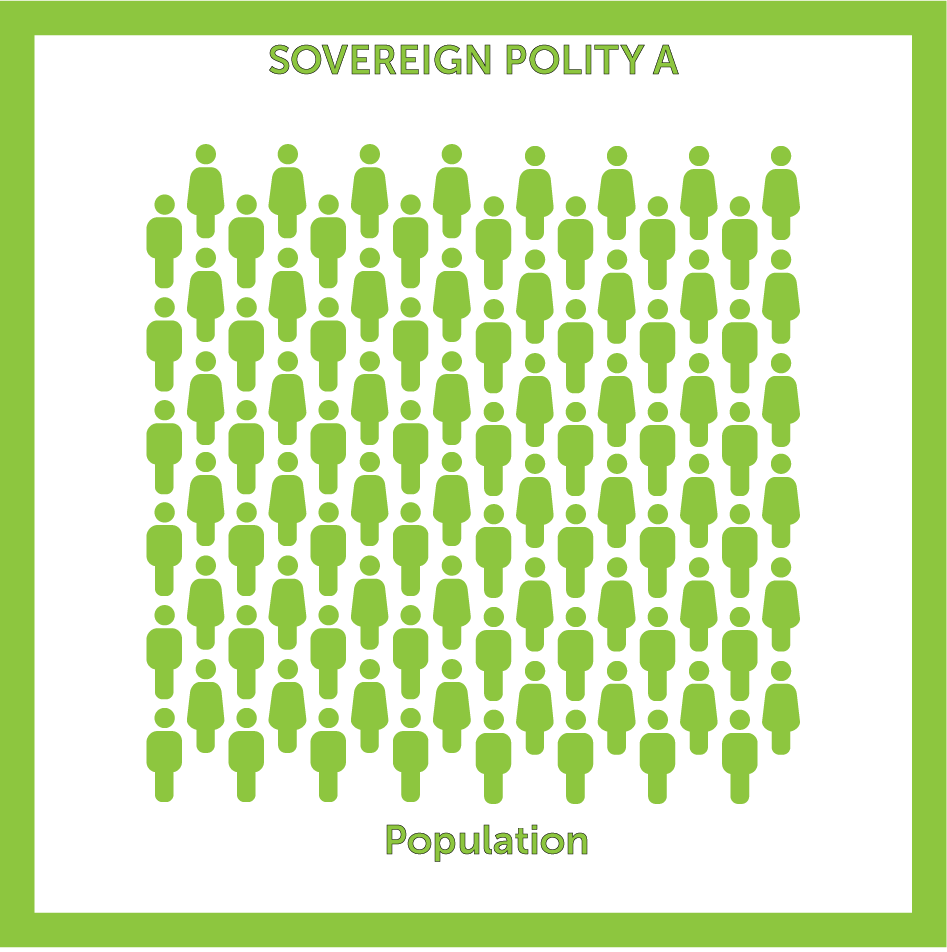
Sovereign political entity A: Population
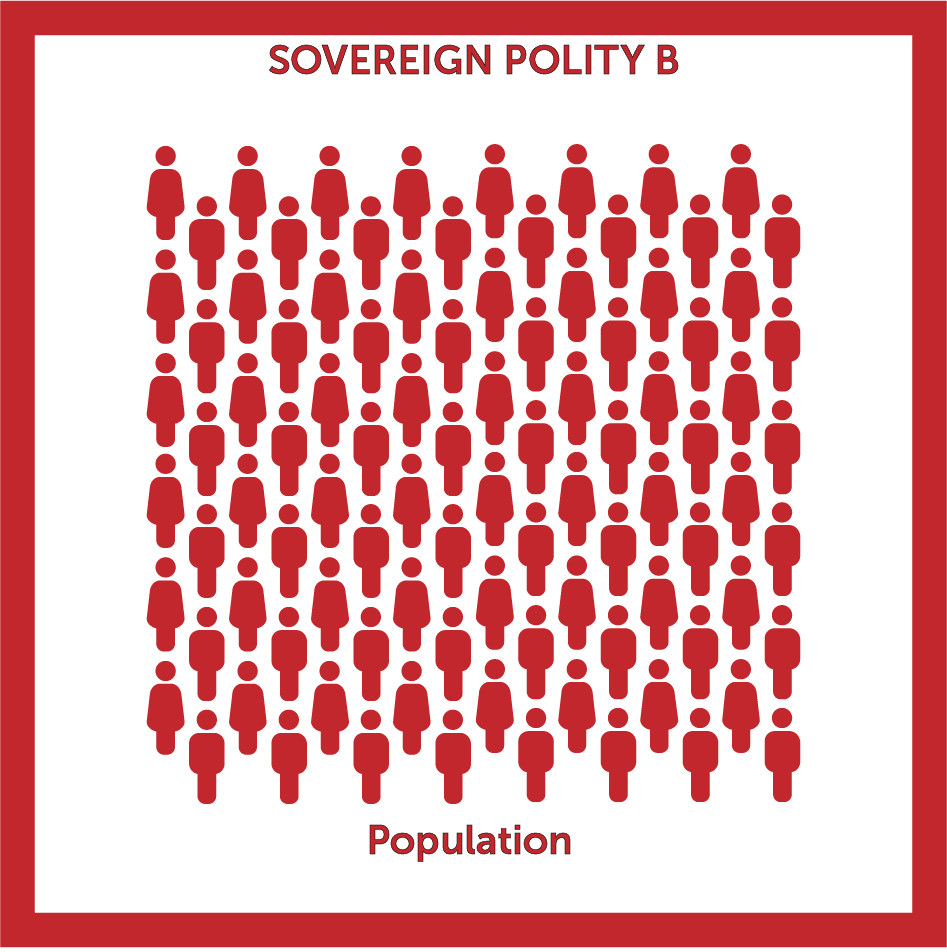
Sovereign political entity B: Population
Government and Private persons
Within a a sovereign political entity's population, a group is responsible for government. This group is formally authorized to rule and make decisions with an effect on its sovereign political entity's jurisdiction. Sovereign political entities have formal processes to legitimize this authority (elections, appointments, selection, etc.).
Individuals not belonging to government are considered private persons.
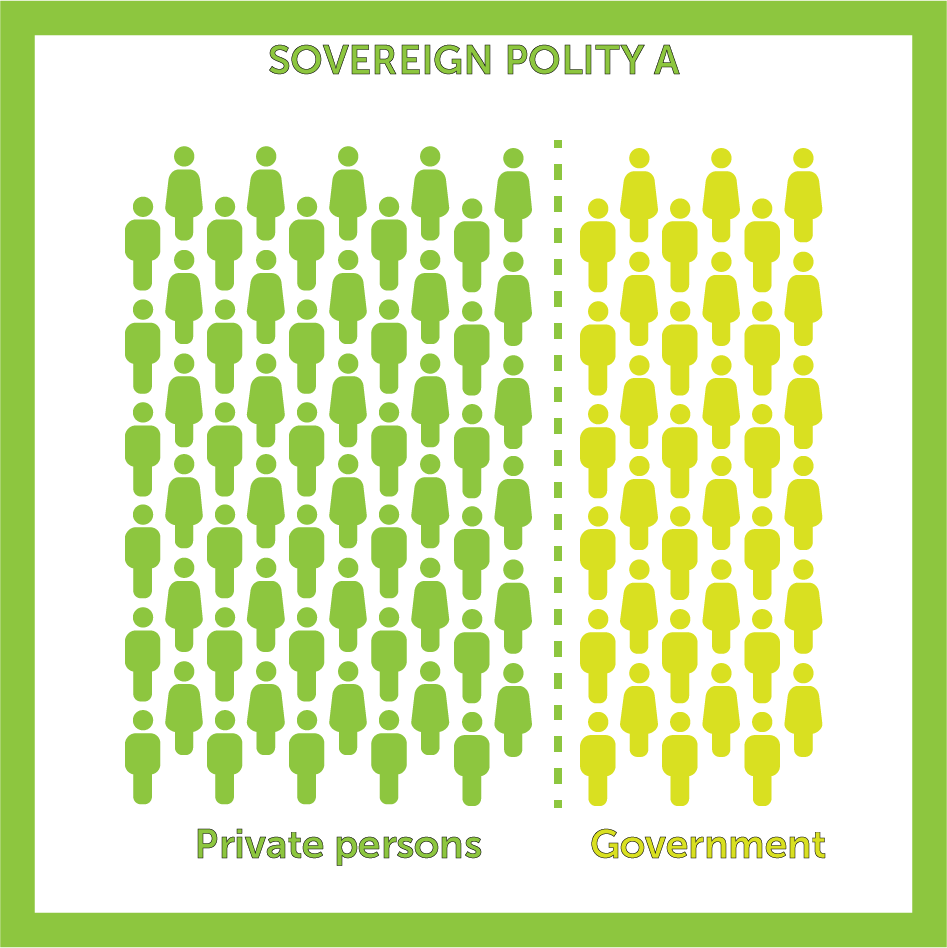
Sovereign political entity A: Government and private persons
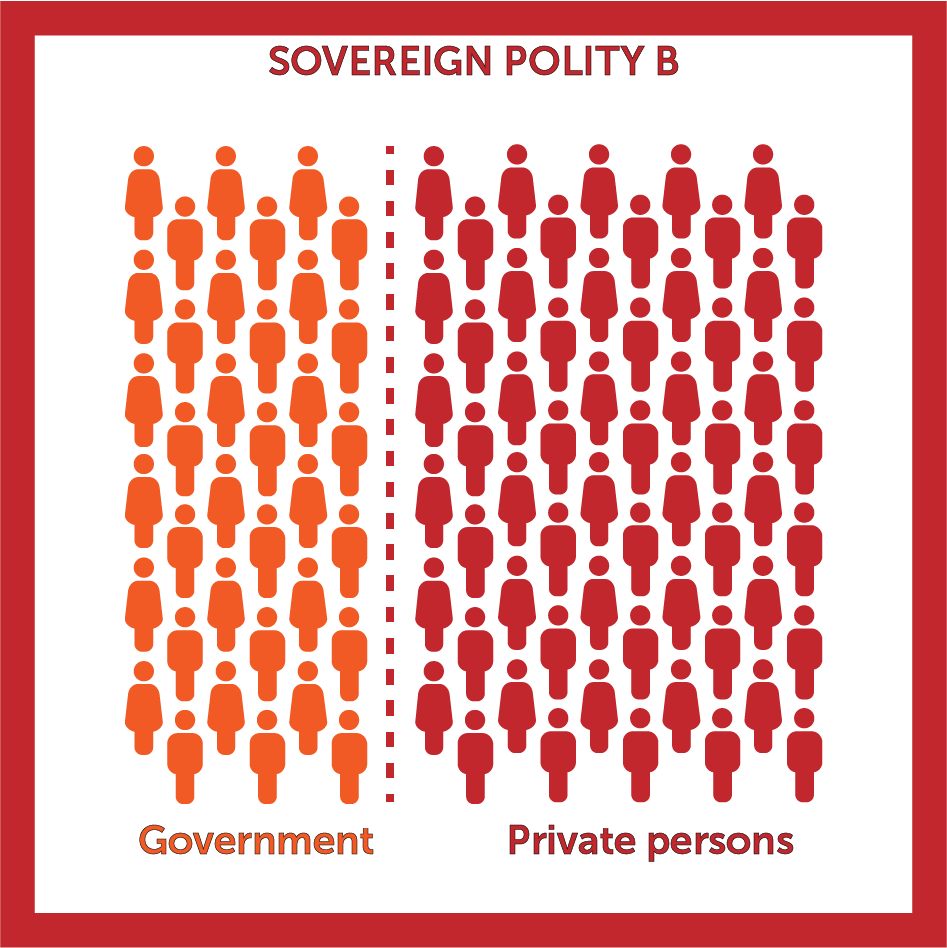
Sovereign political entity B: Government and private persons
Government: Diplomats and non-diplomats
Within a government, a group is authorized to carry out diplomacy. This group, diplomats, is formally authorized and accredited to communicate in the name of the own sovereign political entity with other sovereign political entities. Government actors not formally authorized to carry out this representation and communication are non-diplomats.
Because the decisions and actions of diplomats can bind the own sovereign political entity towards other sovereign political entities and create international responsibility, the process to legitimize representativeness should be carried out following established processes. In other words, diplomats have to be duly accredited.
Not everyone in a population, or even in a government, is duly accredited to represent the own sovereign political entity towards another. Only diplomats are.
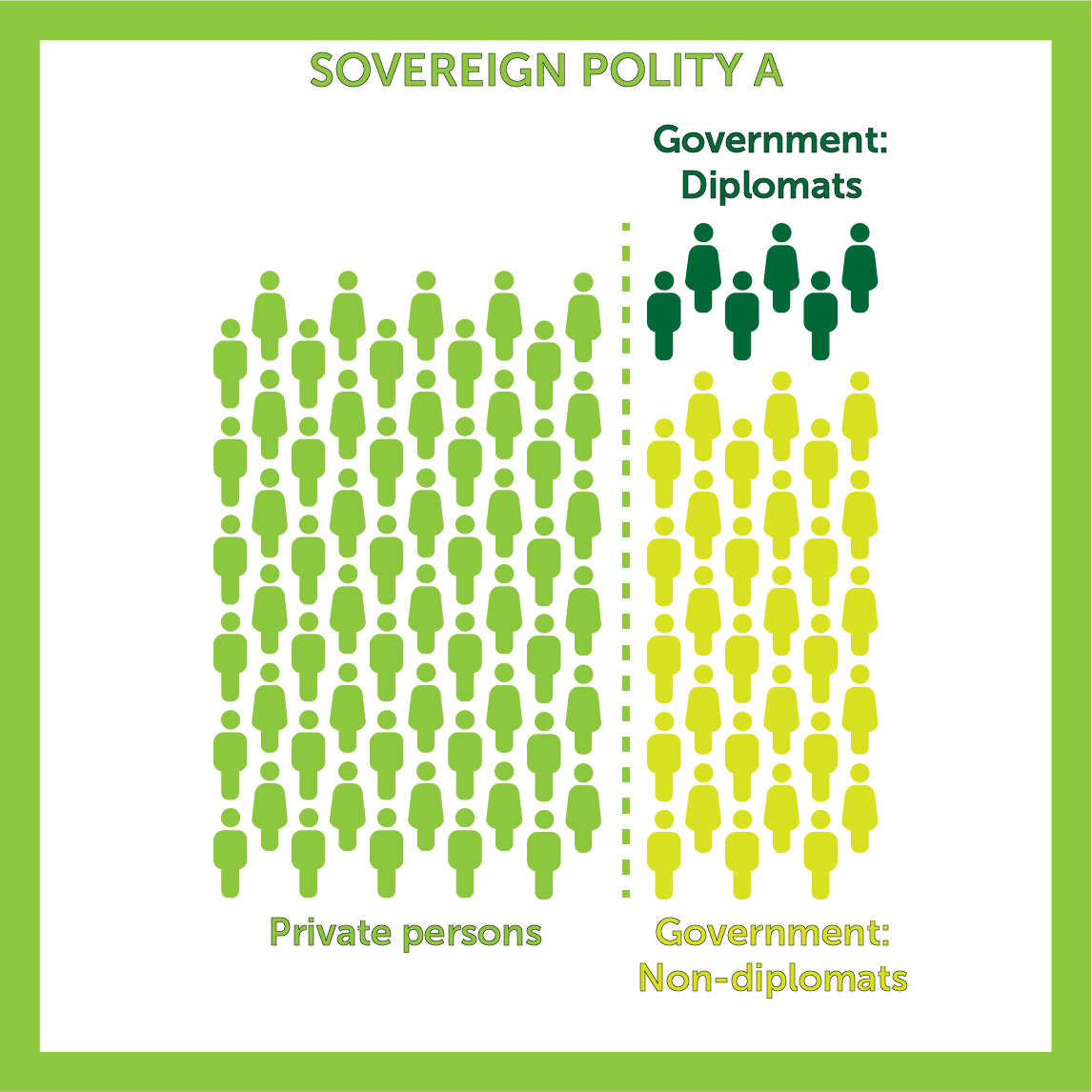
Sovereign political entity A: Diplomats are a subset of government
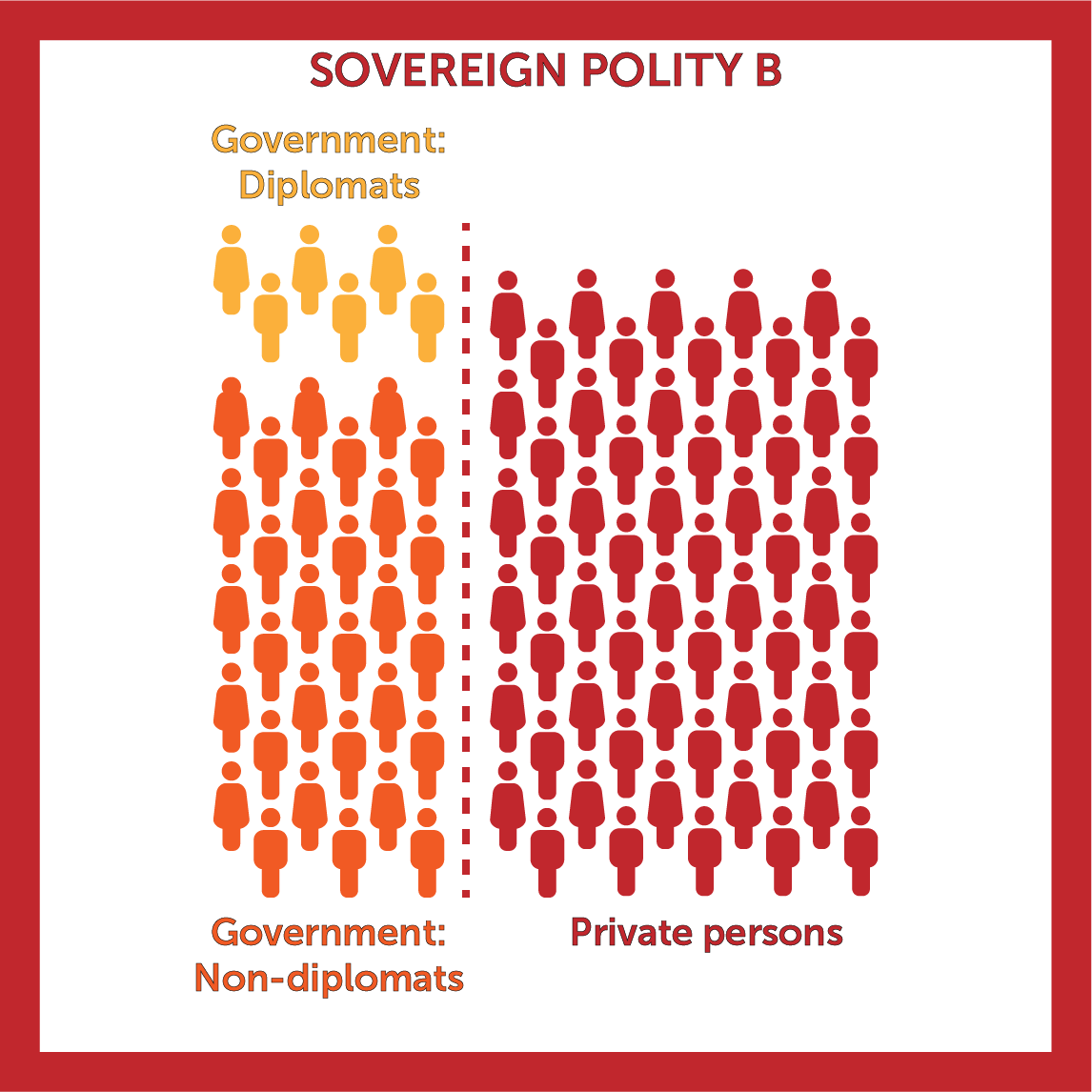
Sovereign political entity B: Diplomats are a subset of government
Step 4. Categorizing communication across sovereign jurisdictions
International relations and diplomacy are frequently used interchangeably; however, they refer to different concepts. International relations is wider and involves interaction between actors from different sovereign political entities. Within international relations, only communication originating from diplomats (duly accredited representatives) can be considered diplomacy. Using Harold Lasswell's model of communication, diplomacy is determined exclusively by the communicator.
Whereas diplomacy is determined by the communicator, public diplomacy is determined by a combination of communicator (diplomat under jurisdiction A) and audience (private person under jurisdiction B).
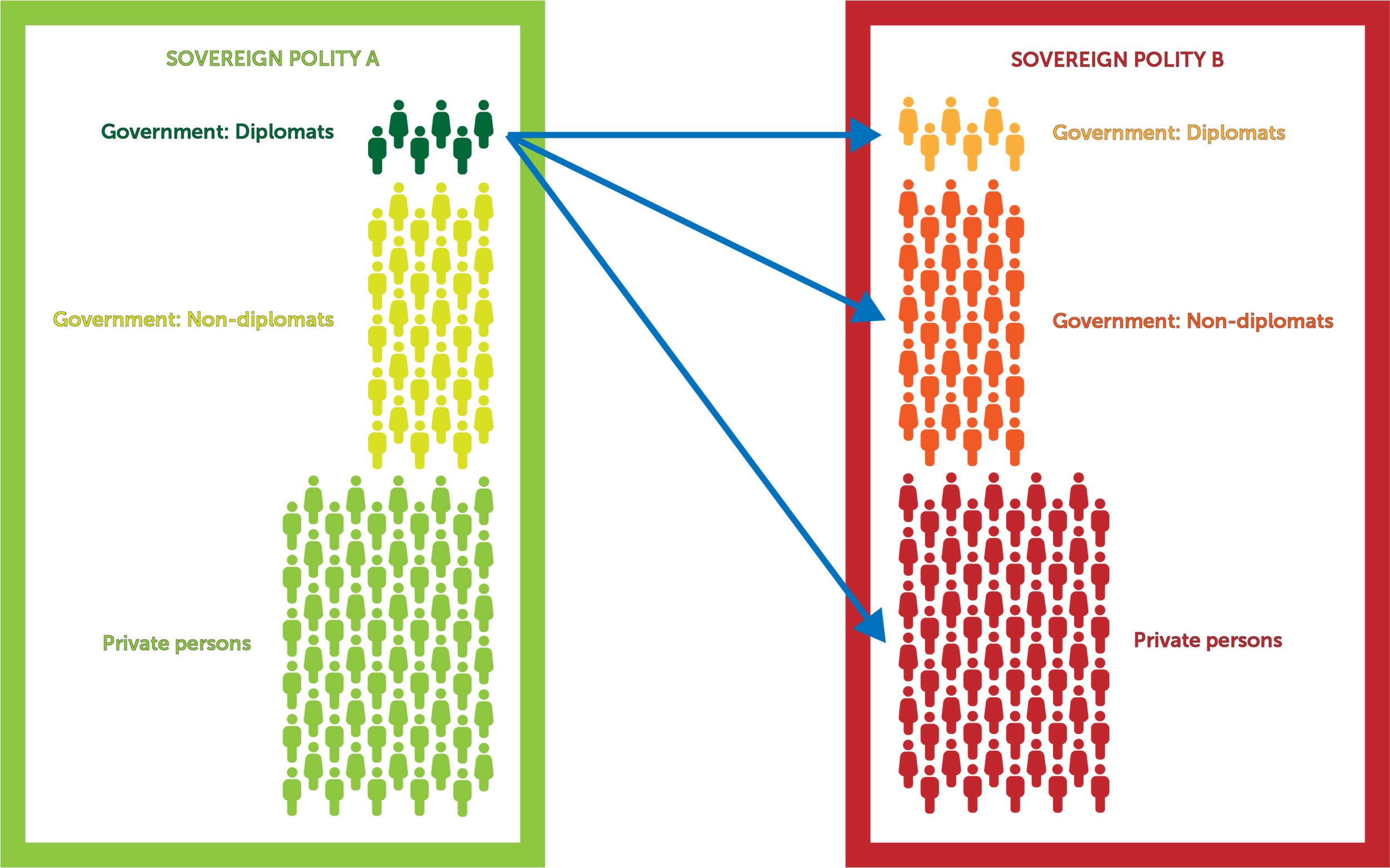
Based on the three possible categories of actors who can be an audience, there are three subsets of diplomacy under the communicator/audience scheme: traditional, bureaucratic, and public. In other words, diplomats from one sovereign polity can communicate across sovereign jurisdictions with:
diplomats: traditional diplomacy,
non-diplomat government officials: bureaucratic diplomacy, and
private persons: public diplomacy.

Public diplomacy only exists when the communicator is a diplomat and the audience is a private person under the jurisdiction of a different sovereign political entity. Therefore:
Communication across sovereign jurisdictions where the communicator is a private person and the audience is a diplomat is not diplomacy or public diplomacy.
Communication between a diplomat and a private person subject to the same sovereign polity is not diplomacy.
References
Collier, David; Gerring, John (eds.). 2009. Concepts and method in social science: The tradition of Giovanni Sartori. Routledge. New York.
Fitzpatrick, Kathy R. 2010. The future of U.S. public diplomacy: An uncertain fate. Brill. Leiden.
Jönsson, Christer; Hall, Martin. 2005. Essence of communication. Routledge. New York.
Manheim, Jarol B. 1993. Strategic public diplomacy & American foreign policy: The evolution of influence. Oxford University Press. New York.
UN International Law Commission. 1962. Sixth plenary meeting (PDF). United Nations. Geneva.
Vilariño Pintos, Eduardo. 2007. Curso de derecho diplomático y consular. Tecnos. Madrid.
Note
Parts of the text above were adapted from my article Mexican Public Diplomacy in European World Expos: 1992-2015, published in Aspíroz Manero, María Luisa (ed.). (2015). Public diplomacy: European and Latin American perspectives. P.I.E. Peter Lang. Brussels.